
Photo: Andrej Jakobčič, Wikimedia Commons, CC BY-SA 3.0. Image cropped and resized
The Challenges
The global plastic waste crisis is reaching a critical point, with alarming statistics highlighting the urgency for immediate action. By 2050, it is projected that there could be more plastic in the oceans than fish. Currently, approximately 10 million tonnes of plastic enter the oceans each year, contributing to massive waste accumulations such as the Pacific Trash Vortex, which spans an area three times the size of France.
In total, more than 30 million tonnes of plastic waste pollute oceans and seas, with an additional 109 million tonnes clogging rivers and waterways. Microplastics present an escalating threat, as they are absorbed by essential organisms such as phytoplankton, which form the foundation of the ocean ecosystem. This disrupts marine ecosystems, reduces the ocean’s ability to act as a carbon sink and diminishes oxygen production critical to marine life.
Disturbingly, in 2022, microplastics were found in over 80% of tested human blood and lung samples, raising serious concerns about their potential health impacts, which remain inadequately researched. [1]
The urgency for action is further underscored by projections showing that, without intervention, plastic production could account for 21% to 31% of the global carbon budget required to limit warming to 1.5°C by 2050. Currently, the plastic industry emits four times more greenhouse gases than the aviation sector, equivalent to the emissions of approximately 600 coal-fired power plants, making it a significant contributor to climate change.
Despite some progress, Europe’s plastic value chain remains predominantly linear. In 2023, of the 54 million tonnes of plastic processed in Europe, only 13.4% originated from post-consumer recycled materials. Of the 32.3 million tonnes of post-consumer plastic waste collected in 2022, only 26.9% was recycled, while 49.6% was incinerated and 23.5% ended up in landfills. [1]
These inefficiencies highlight the urgent need for innovative recycling technologies to unlock the full potential of plastic waste as a valuable resource. Recycling one tonne of plastic can prevent up to 2.5 tonnes of CO₂ emissions compared with the use of virgin materials and save approximately 5,770 kWh of energy, equivalent to the electricity consumption of an average EU household over two years. Transformative action is essential to address this crisis and pave the way towards a sustainable and circular future. [2]
Bio-packaging waste, including cellulose and lignocellulose, presents additional challenges. These materials contribute approximately 20% of anthropogenic methane emissions, a potent climate pollutant. Effective recycling of the 140 million tonnes of bio-packaging waste generated annually in the EU, only 40% of which is currently converted into high-quality compost or digestate, could significantly mitigate greenhouse gas emissions and replace fossil-intensive products.
Bio-based products derived from bio-waste have the potential to save up to 2.5 billion tonnes of CO₂ equivalent annually by 2030 while offering superior environmental and technical performance. [3]
Key Figures
10 million tonnes
of plastic enter the oceans each year.
30+ million tonnes
of plastic waste pollute oceans and seas.
109 million tonnes
of plastic waste accumulate in rivers and waterways.
54 million tonnes
of plastic were processed in Europe in 2023.
13.4%
originated from post-consumer recycled materials.
26.9%
of post-consumer plastic waste collected in 2022 was recycled.
Up to 2.5 tonnes of CO₂
can be avoided by recycling one tonne of plastic.
Approximately 5,770 kWh
of energy can be saved by recycling one tonne of plastic.
What POLYLOOP Delivers
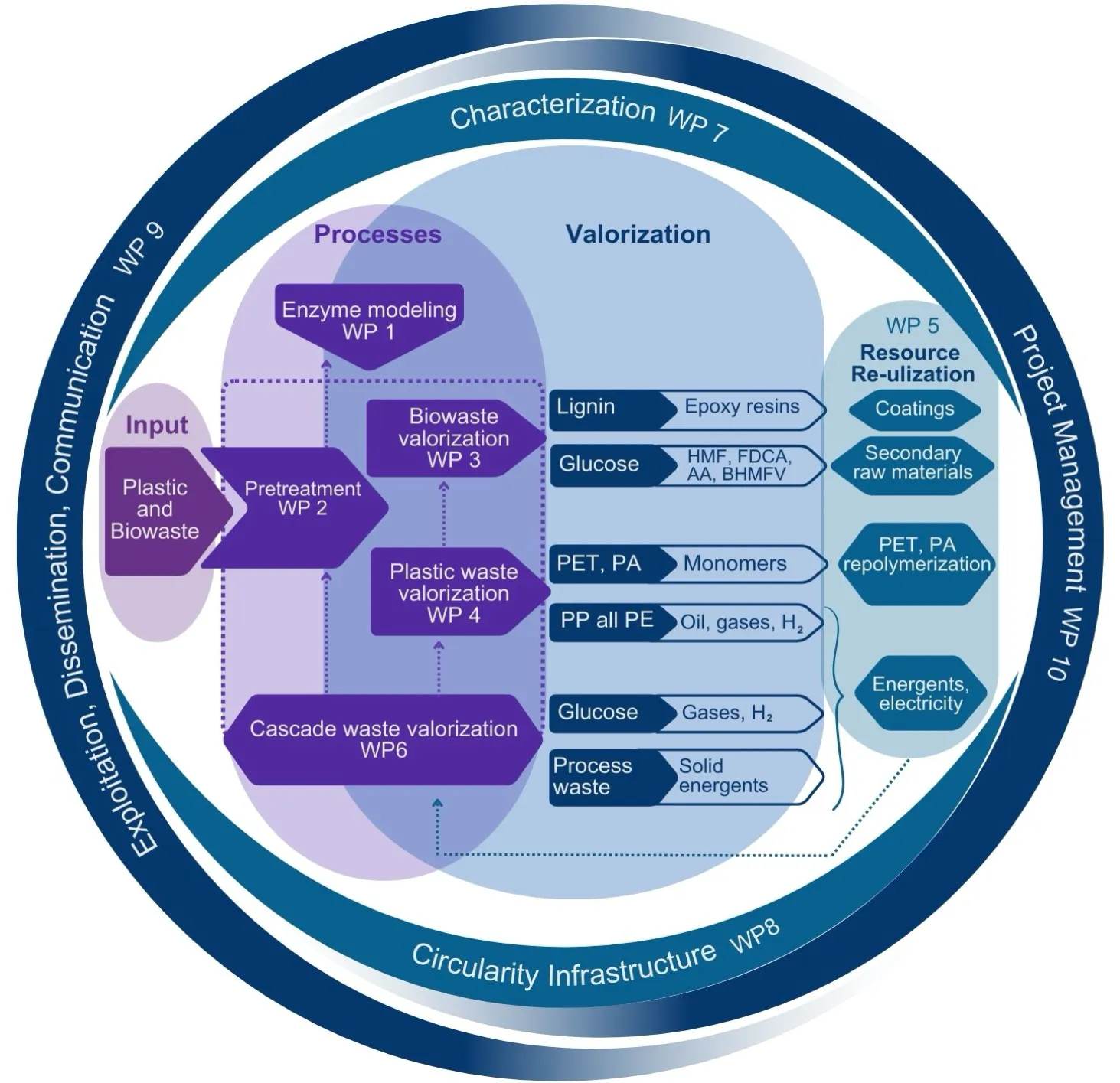
POLYLOOP transforms plastic and bio-packaging waste into valuable secondary raw materials (sRM) and alternative energy sources, reducing pressure on petroleum-based resources.
By integrating state-of-the-art recycling technologies and digital innovation, the project contributes to climate change mitigation, resource efficiency and the transformation of plastic and bio-waste.
POLYLOOP follows a zero-waste philosophy by converting residual streams from recycling processes into energy sources, while prioritising material recycling in line with the EU Waste Framework Directive (2008/98/EC). [4]
Methodology
The POLYLOOP project focuses on exploring new opportunities to transform plastic and bio-packaging waste into valuable secondary raw materials (sRM) and alternative energy sources. This approach offers several interconnected benefits, such as reducing the massive amounts of plastic and bio-packaging waste. Sustainable recycling processes, including enzymatic and chemical methods, can be used indefinitely and will reduce reliance on fossil-based raw materials and energy sources, thereby significantly contributing to climate change mitigation and energy sustainability. Enzymatic recycling is an energy-efficient process, and combining enzymatic and chemical degradation can be particularly beneficial for mixed waste streams containing two or more materials.
Milestone
Title
Some text
Title
Some Text
Title
Some Text
Title
Some text
Title
Some text
References
[1] Plastics Europe. EU-27 data for 2022 and 2023.
[2] Material Economics. The Circular Economy – A Powerful Force for Climate Mitigation. 2018.
[3] Clean Air Task Force. How Our Trash Contributes to Climate Change. 2022.
[4] European Parliament and Council. Directive 2008/98/EC on waste.